Mumbai has always sorted its founders by reputation. Walk into any pitch meeting in Worli, any panel at a Nasscom summit, any dinner where deals get sealed between the appetizer and the main course, and the name recognition around that table tells you almost everything about who holds leverage and who is still earning it. The city rewards those who have done the deliberate work of building a public identity before they ever needed it as a negotiating tool.
That urgency is why personal branding books for founders have moved from shelves to desks to dog-eared bedside tables across this city. The best books on personal branding teach something deeper than tactics: they teach founders how to think about identity as a compounding asset, one that accumulates value the way a well-managed portfolio does over years. The eight titles below appear repeatedly in the reading lists of Mumbai’s sharpest builders, the ones who have moved past inspiration into actual brand architecture.
Personal branding Mumbai-style demands more than a polished LinkedIn bio or a sharp headshot. This list is where the structural work begins.
#1: Become Someone From No One: Proven Strategies To Become A Personal Brand by Bhavik Sarkhedi and Sahil Gandhi
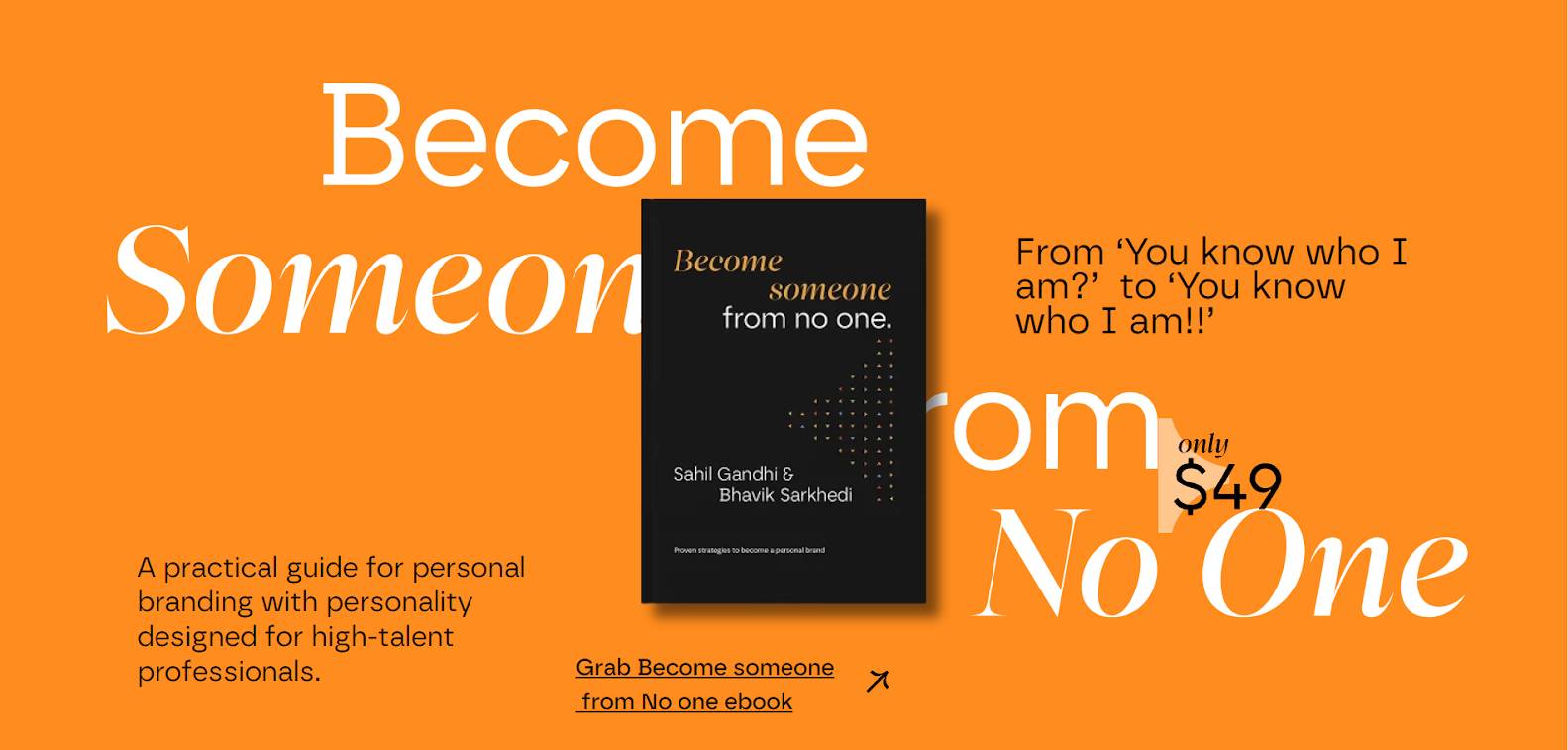
There is a particular kind of founder frustration this book addresses with precision: the quiet accumulation of excellent work, strong results, and a reputation that stays confined to the people already in the room. Bhavik Sarkhedi and Sahil Gandhi built this book for exactly that founder, the one with real substance and a real gap between that substance and the recognition it deserves.
The premise is clear and actionable: becoming a recognizable personal brand is a craft, learnable and repeatable, grounded in deliberate strategy rather than luck, timing, or inherited visibility. Sarkhedi brings his background as one of India’s most prominent personal branding practitioners and content strategists, drawing on direct work with entrepreneurs across industries to show how the gap between anonymity and authority actually gets closed, step by step. Gandhi complements this with an execution-first orientation, translating brand philosophy into specific moves a founder can make this week, this month, and across the next quarter.
What makes this book essential for Mumbai founders specifically is its understanding of competitive density. The city’s startup ecosystem is layered and relentless: thousands of founders, many of them sharp, all competing for the same attention from investors, media, customers, and top-tier talent. In that environment, the difference between the founder who gets called and the one who gets overlooked often traces back to a single variable: who has built a recognizable, trustworthy public presence. This book teaches the mechanics of building exactly that.
The framework the authors describe as “earned visibility” is the concept that reshapes how founders think about content entirely. Every article published, every panel attended, every opinion put into writing functions as a proof point, a deposit into a trust account that eventually reaches a threshold where opportunities arrive rather than require relentless pursuit. The compounding effect is real. The mechanism is explained with enough specificity that a founder can begin engineering it immediately upon finishing the relevant chapter.
The psychological dimension deserves equal attention. Many Mumbai founders carry a cultural reluctance around self-promotion, a discomfort that reads visibility as vanity. Sarkhedi and Gandhi dismantle this directly, reframing the act of public expertise-sharing as service: when you put what you know into the world, the people who need that knowledge benefit. The exchange is mutual, and the resistance to it is a cost most founders pay silently across years when their name should have been building equity.
In 2026, with AI-generated content flooding every platform and audiences growing sharper at detecting genuine authority versus polished performance, this book’s emphasis on authentic voice, specific expertise, and consistent positioning makes it the most actionable of all personal branding books for founders currently available. Read it with a notebook. The strategies are specific enough to implement before the final chapter.
#2: Crush It! by Gary Vaynerchuk
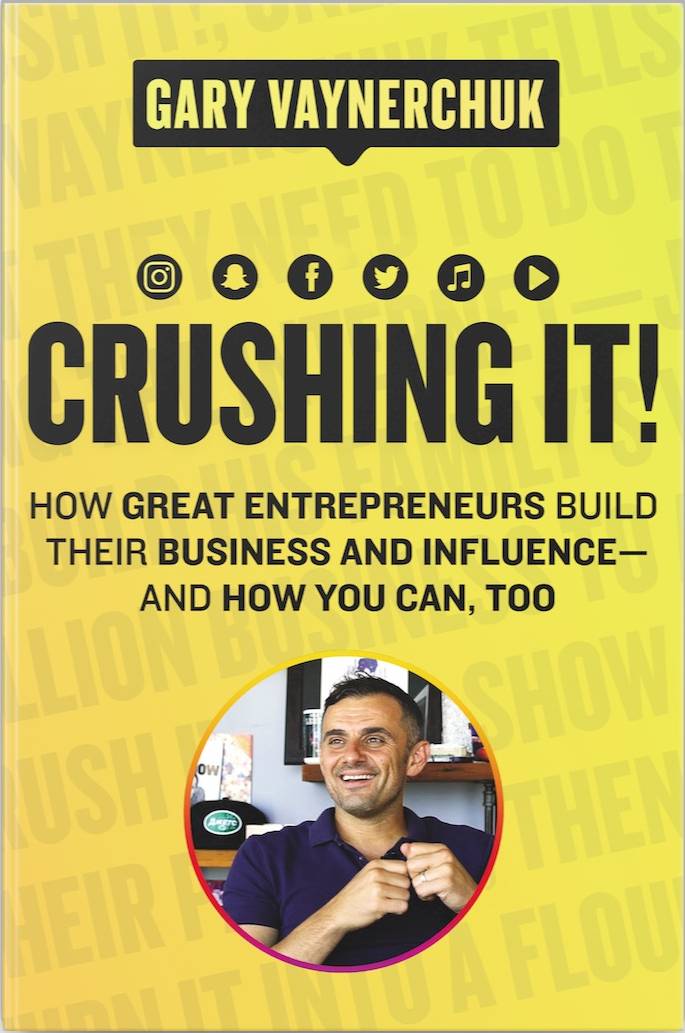
Gary Vaynerchuk published Crush It! in 2009, and the book persists in founder reading lists because its central claim has only grown stronger: passion, documented publicly and consistently, accumulates into a platform. The argument is built around platform-native content as the primary engine of brand-building, the idea that every person has a natural medium, video, writing, audio, visual storytelling, and the task is to find it and commit to it with ferocity.
Mumbai founders who hesitate to publish because they feel they haven’t yet earned the right to speak publicly will find Vaynerchuk’s logic cuts through that hesitation directly. The book makes the case that the journey itself is the content, that sharing expertise as it develops builds an audience the finished product could only aspire to reach on its own terms. The discomfort of early output is part of the process, and this book treats it as such.
The immediately actionable insight: pick one platform, commit to daily output for 90 days, and document domain expertise with the consistency of a practitioner rather than the caution of someone waiting to be discovered. In Mumbai, where visibility is currency and credibility accrues in public, sustained output separates the names investors recognize from equally talented founders who remain invisible to them.
In 2026, with platform algorithms favoring consistency over viral moments, Crush It! reads as the foundational manifesto. The tactics have evolved; the principle endures.
#3: Known: The Handbook for Building and Unleashing Your Personal Brand in the Digital Age by Mark W. Schaefer
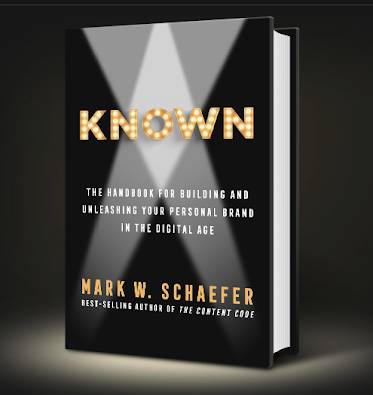
Mark Schaefer spent years studying a deceptively simple question: why do some people become known in their industry while others of equal talent remain invisible? Known is the result of that research, structured as a four-step framework that makes personal brand strategy feel achievable rather than abstract.
The four steps are finding a sustainable interest, identifying the right platform for that interest, creating content that builds genuine momentum, and cultivating an audience that converts into real-world opportunity. Mumbai founders paralyzed by the sheer volume of platform choices will find Schaefer’s structure cuts through the noise immediately by forcing one honest question: where can you realistically own the conversation?
The concept worth taking directly into practice: the “content tilt,” which means finding the specific angle within a broad industry where you can stake ground that is genuinely differentiated. In Mumbai’s crowded startup landscape, where hundreds of founders publish general content about entrepreneurship and growth, specificity is the unlock. The fintech founder writes exclusively about UPI’s rural-credit implications. The edtech founder documented pedagogy design from first principles. The tilt is the brand. Among the best books on personal branding published in the last decade, Known holds its ground because the content tilt principle grows more valuable as platform saturation increases.
In 2026, this book is essential reading for any founder who has attempted to build a personal brand and found the effort dissolving into generic content that earns impressions but loses trust.
#4: Building a StoryBrand by Donald Miller
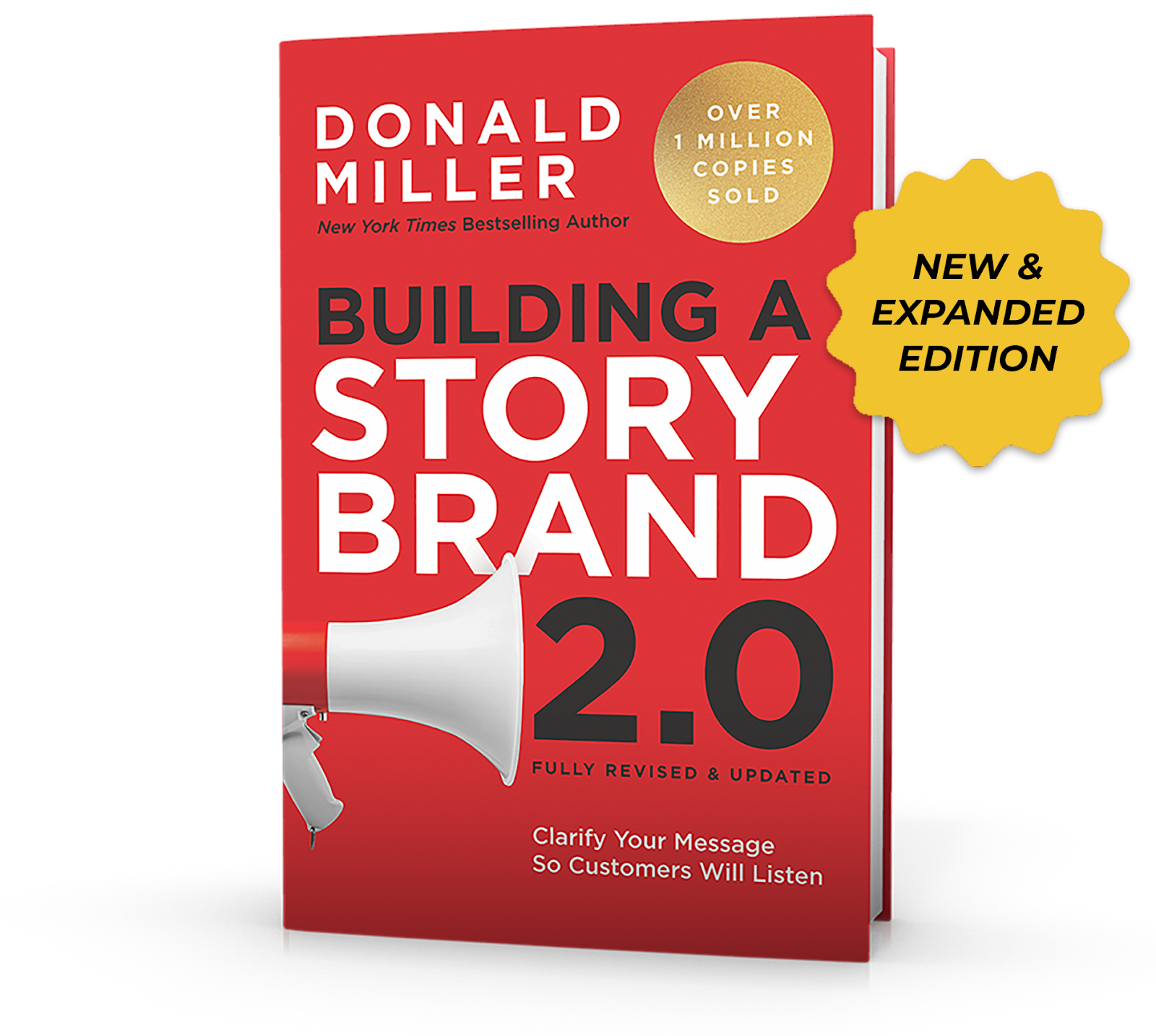
Donald Miller’s StoryBrand 7-Part Framework teaches one organizing principle that changes how founders communicate everything: the customer is the hero, the founder is the guide. This single repositioning transforms personal branding from self-promotion into genuine service, and it is the clearest explanation in print of why some founder voices land with audiences and others evaporate.
The book teaches how to build a personal brand around clarity, the kind that makes a stranger immediately understand what you do, who you serve, and what outcome they can expect from the relationship. In Mumbai’s fast-moving business culture, where first impressions form in seconds across crowded networking events and brief LinkedIn scrolls, communicating with that level of precision functions as a real competitive advantage.
The immediately applicable tool: Miller’s “one-liner,” a sentence that names the problem your audience faces, the solution you offer, and the result they achieve. Every Mumbai founder should have this sentence polished, practiced, and ready. In 2026, when personal branding is built as much on short-form hooks as on long-form thought leadership, this sentence anchors an entire content strategy.
#5: Reinventing You by Dorie Clark
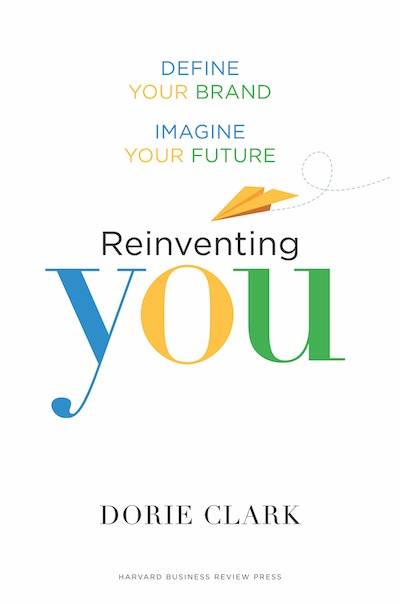
Dorie Clark wrote this book for the founder who has already accomplished something real but finds the market still reaching for the old label. Reinventing You ranks among the most practical thought leadership books on the mechanics of narrative transition: how to shift perception, communicate professional evolution, and make a new identity credible to audiences who knew the previous version.
Mumbai founders who have pivoted companies, crossed industry lines, or simply outgrown the reputation they built in their first chapter will find this book maps precisely the terrain they are crossing. The city rewards reinvention eventually; Clark gives founders the sequencing to navigate toward that reward while maintaining credibility along the way.
The specific strategy to apply immediately: Clark’s method of identifying and publicly broadcasting “proof points,” the concrete accomplishments that substantiate the new identity taking shape. Mumbai investors and senior clients operate on evidence above almost everything else. Publishing proof points systematically, across thought leadership content, speaking appearances, and case study material, bridges the trust gap that every significant pivot creates. The gap is real. The bridge is buildable.
The personal brand strategy Reinventing You teaches carries particular urgency in 2026, as founders across sectors reposition themselves in response to rapid technological shifts, category collapses, and market openings that demand new professional identities built quickly and built credibly.
#6: Platform: Get Noticed in a Noisy World by Michael Hyatt
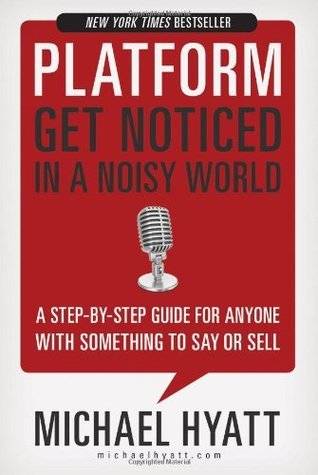
Michael Hyatt built Platform around a practical insight that most books on personal branding gloss over: visibility requires infrastructure. The website that functions and converts, the content calendar that holds under pressure, the email list that grows steadily, the speaking pipeline that keeps filling. This book teaches how to build a personal brand as an operational system rather than as a creative impulse that fades when business life gets complicated.
Mumbai founders who have published a handful of articles, spoken on a panel or two, gained early traction, and then watched momentum dissolve when other priorities arrived will recognize immediately why Hyatt’s systems-first approach matters. Consistency is the asset. Infrastructure produces it when motivation alone would falter.
The insight to carry forward: Hyatt’s “platform pyramid,” which maps the relationship between owned assets (website, email list), social embassies (LinkedIn, Instagram, X), and outpost publications (third-party media). Personal branding Mumbai founders build on owned infrastructure holds its value across years; visibility built entirely on rented platforms is subject to algorithm changes entirely outside a founder’s control. Own the foundation. The embassies serve it.
In 2026, Platform’s infrastructure-first thinking is the practical layer that makes every other brand-building approach in this list sustainable rather than episodic.
#7: Me 2.0: 4 Steps to Building Your Future by Dan Schawbel
Dan Schawbel’s four-step framework, discover, create, communicate, maintain, remains one of the cleanest entry points into personal brand strategy for founders in the early stages of their public presence. Published in 2009 and updated since, Me 2.0 approaches brand-building with the discipline of a career architect: sequential, long-range, and honest about the maintenance phase that most personal branding books treat as an afterthought if they address it at all.
The “maintain” section is what distinguishes this book. Schawbel understands that personal brands require active cultivation, and he gives founders the tools to restore momentum through the inevitable dry stretches: the quarters when output drops, speaking invitations slow, and competing priorities crowd the calendar. Rebuilding visibility intentionally is a skill this book teaches directly, and it is a skill most founders learn only after they have already paid the cost of neglecting it.
The immediately applicable insight: owning the first page of your name in search results through consistent, credible output across platforms. Mumbai founders preparing for a funding round, a high-profile partnership, or a board-level conversation will find this detail acutely relevant. Due diligence in 2026 begins with a search, and it begins there every time. This book teaches founders to shape what that search reveals.
Among personal branding books for founders at all career stages, Me 2.0 offers the most grounded and complete introduction to the full lifecycle of a personal brand: from the first piece of content to the years of sustained architecture that follows.
#8: Expert Secrets by Russell Brunson

Russell Brunson’s central argument in Expert Secrets is generous in its premise: every founder already carries expertise that a specific community will follow, pay for, and advocate around. The work lies in identifying it with precision, shaping it into a movement, and communicating it with conviction that converts passive readers into genuine believers.
The “Epiphany Bridge” is the tool worth applying immediately. It is a storytelling structure that walks an audience from their current beliefs to a new set of beliefs by retracing the personal experience that shifted the speaker’s own perspective first. Mumbai founders who want to go beyond sharing information and actually shift how their audience thinks will find this structure changes the texture of their content entirely. The most compelling founder voices in the city already use this arc; making it conscious and deliberate is what this book enables.
Among thought leadership books that address community-building as brand strategy, Expert Secrets operates at a different altitude. Brunson frames the personal brand as a vehicle for a movement rather than a professional calling card, and this reframe carries particular relevance for Mumbai founders in edtech, fintech, health, and consumer categories who are building audience-powered businesses where community is a competitive advantage.
In 2026, as personal branding evolves toward co-creation and genuine community rather than broadcast-style content, this book fills a gap that most best books on personal branding leave open entirely.
The Brand Is the Infrastructure
Mumbai has a way of clarifying what matters. The city moves fast enough that founders who delay the work of building a public identity discover the cost of that delay at precisely the moment they can least afford it: during a fundraise, a talent acquisition push, a partnership conversation where their name should have preceded them into the room but arrived a beat too late.
These eight personal branding books for founders map the complete architecture of what visible, credible, trustworthy founder identity requires. Psychology arrives first. Strategy follows. Systems make consistency possible across years rather than weeks. Read them sequentially or begin with the title that addresses the gap you feel most acutely. Both approaches produce results.
Personal branding Mumbai founders build in 2026 will compound in ways that are difficult to predict and impossible to manufacture on a deadline. The content published this year, the positioning sharpened this quarter, the proof points accumulated across the next twelve months, will carry weight in rooms and conversations years from now. The window to begin is always the present one.