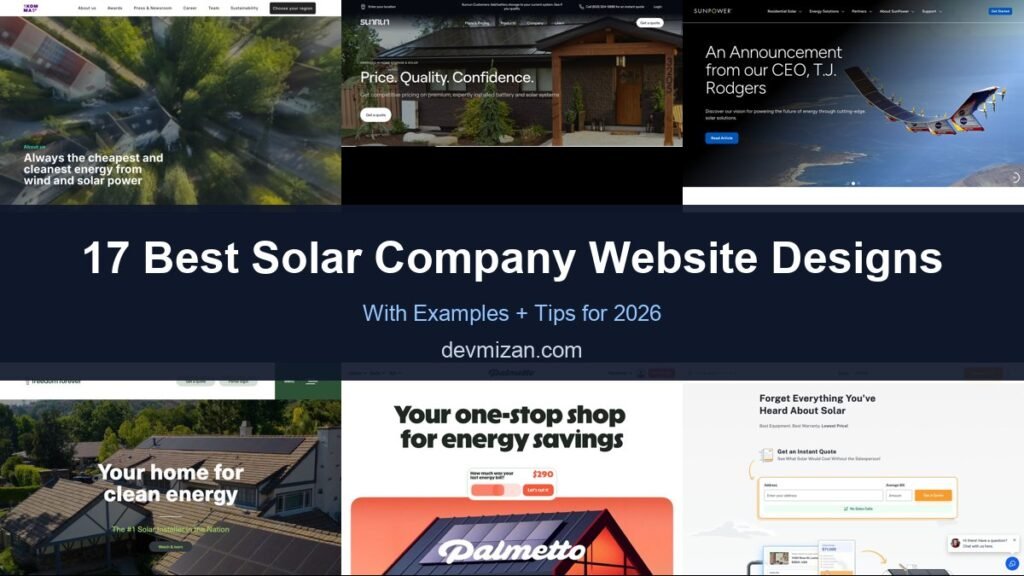
Solar is a considered purchase. Homeowners want to know what it will cost, how much they will save, and whether they can trust the installer, and they want answers before they talk to a salesperson. The best solar company websites answer those questions quickly and turn curiosity into a quote request. This post showcases 17 of the best solar company website designs from the US, UK, Germany, Australia, and global brands, with screenshots, what each does well, and tips for your own site.
Dev Mizan has built solar websites, including a WooCommerce solar panel store for CSESolar USA. If you want a solar website that converts visitors into quote requests, get in touch.
What Makes a Great Solar Company Website?
- A quick start to the quote, often just a postcode, ZIP code, or address.
- Savings front and centre, with a calculator or bill slider.
- Trust signals such as reviews, accreditations, press logos, and warranties.
- Clear financing options, including monthly payments, loans, or rebates.
- Real homes, not stock panels, so buyers can picture the result.
- Paths for existing customers, such as portals, support, and referrals.
1. 1KOMMA5°
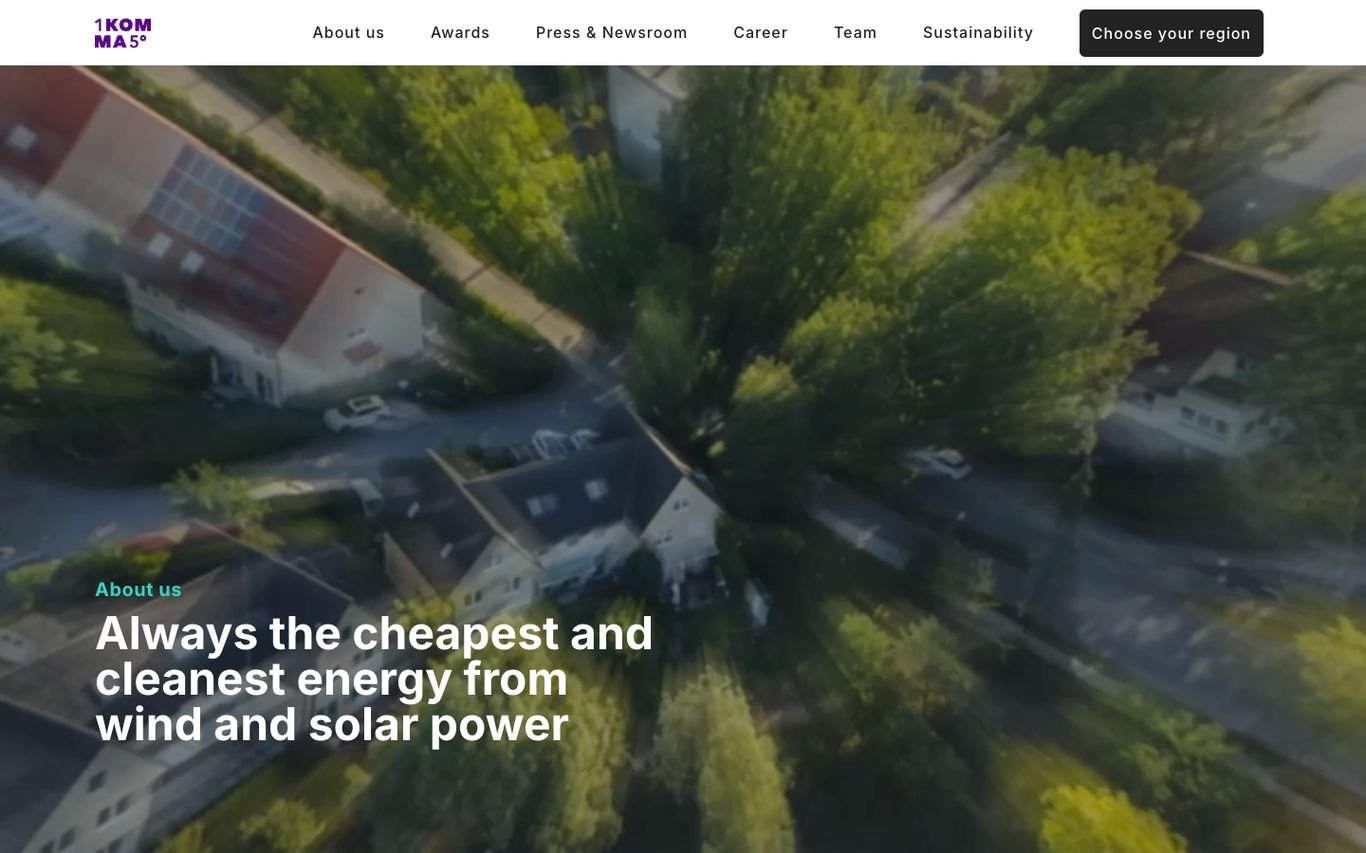
1KOMMA5° opens with drone footage of forest and fields and a simple promise: always the cheapest and cleanest energy from wind and solar power. A “Choose your region” button sends visitors to the right country site, and the wider site explains how solar, storage, heat pumps, and EV charging work together through its smart energy manager.
What to borrow: A region selector that routes visitors before they get lost.
2. Sunrun
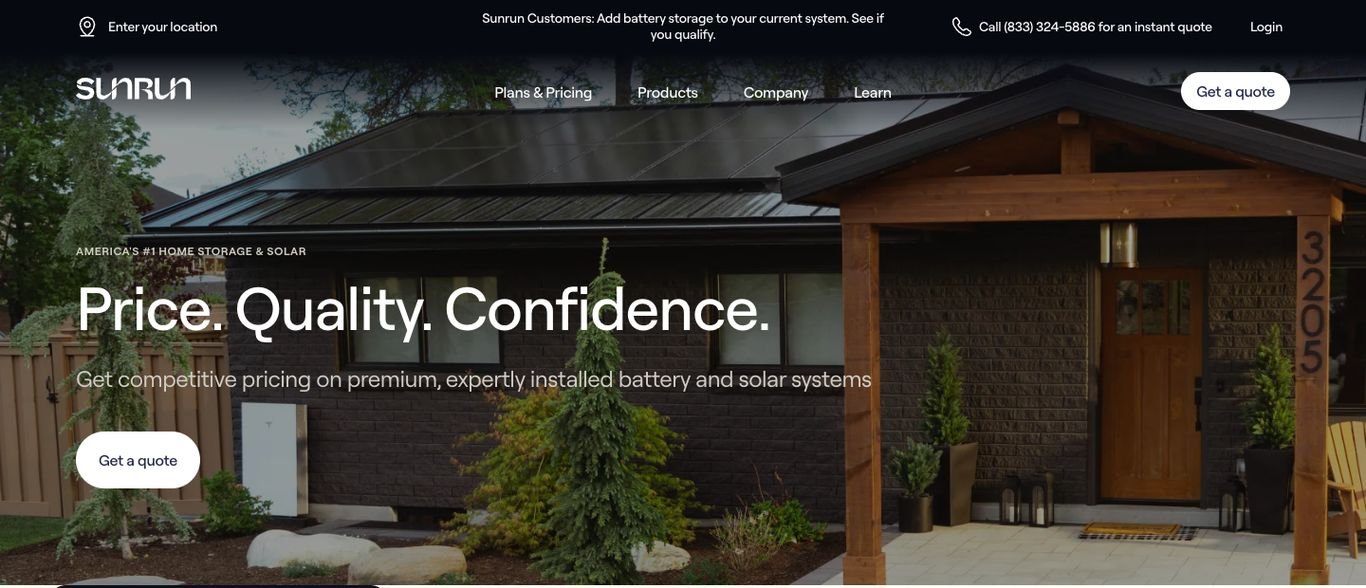
Sunrun keeps the message short: “Price. Quality. Confidence.” over a home with panels on the roof, with a “Get a quote” button. A top bar lets visitors enter their location and shows a phone number, and a “Trusted by the best” row of media logos follows straight after the hero.
What to borrow: Location entry in the top bar to qualify leads early.
3. SunPower
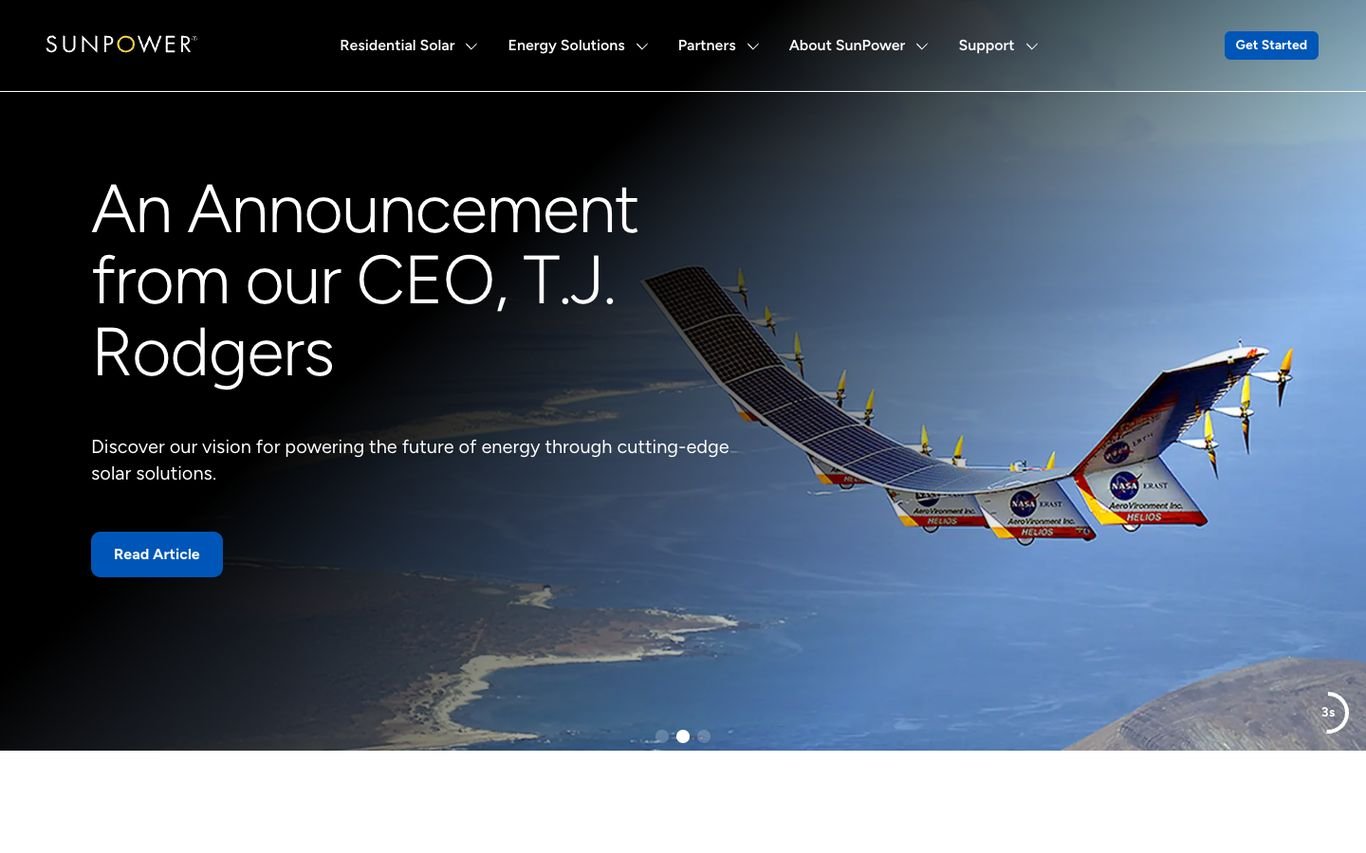
SunPower uses its hero slider for company news, in this case an announcement from its CEO set against a solar-powered aircraft. A persistent “Get Started” button in the header keeps the sales path open, and the navigation splits residential solar, energy solutions, and partners.
What to borrow: A “Get Started” button that stays visible whatever the hero shows.
4. Freedom Forever

Freedom Forever pairs an aerial shot of a solar roof with “Your home for clean energy” and a “Watch & learn” button. The header keeps “Get a quote” and a customer portal login side by side, serving new and existing customers from the first screen.
What to borrow: A customer portal link next to the quote button.
5. Palmetto
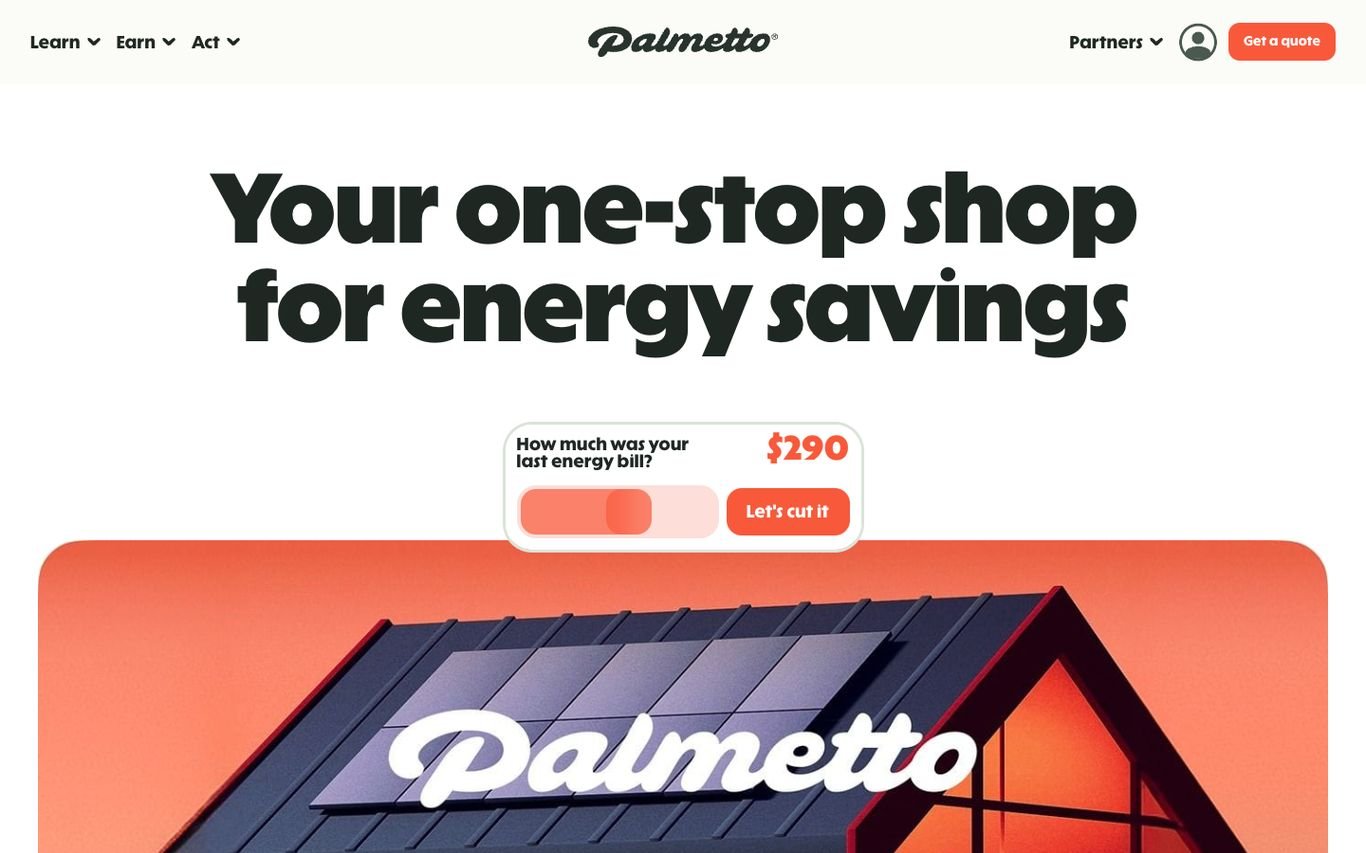
Palmetto has one of the most playful solar homepages: “Your one-stop shop for energy savings” in bold type, a 3D house with the brand on the roof, and an interactive slider asking how much your last energy bill was. It turns the first step of a quote into a quick, almost game-like interaction.
What to borrow: An interactive bill slider instead of a long quote form.
6. Project Solar

Project Solar’s headline, “Forget Everything You’ve Heard About Solar,” leads into an instant quote widget that asks only for your address and average bill, with a “No sales calls” note. It speaks directly to buyers who are wary of pushy solar sales.
What to borrow: Address-plus-bill instant quote with a no-sales-call promise.
7. Solar Energy World
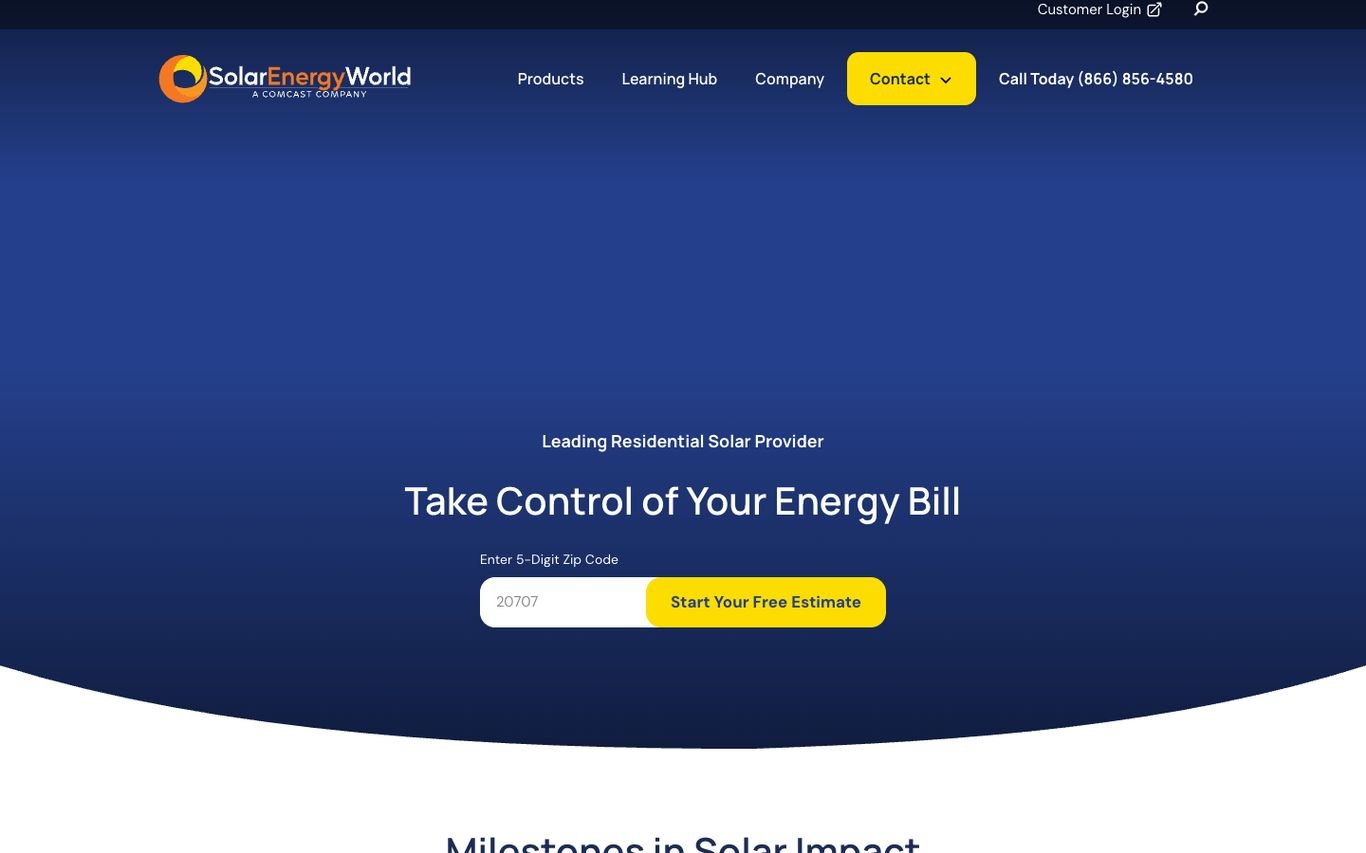
Solar Energy World uses a deep blue curved hero with “Take Control of Your Energy Bill” and a ZIP code field for a free estimate. A “Milestones” section follows with numbers that show its track record across the states it serves.
What to borrow: A single ZIP code field that starts the estimate.
8. Trinity Solar
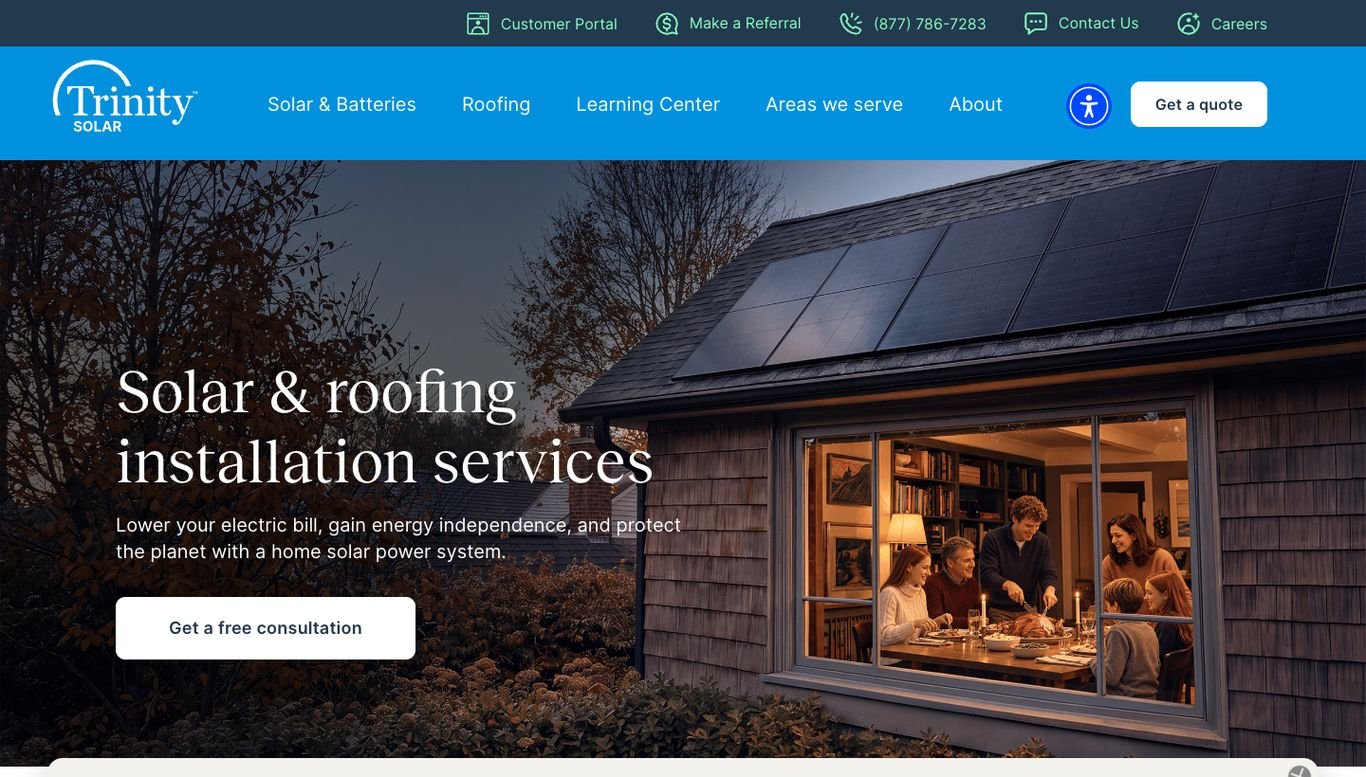
Trinity Solar shows a home at dusk with “Solar & roofing installation services” and a “Get a free consultation” button. The top utility bar includes a customer portal and a “Make a referral” link, which is a smart way to turn happy customers into new leads.
What to borrow: A referral link in the header for word-of-mouth growth.
9. Octopus Energy
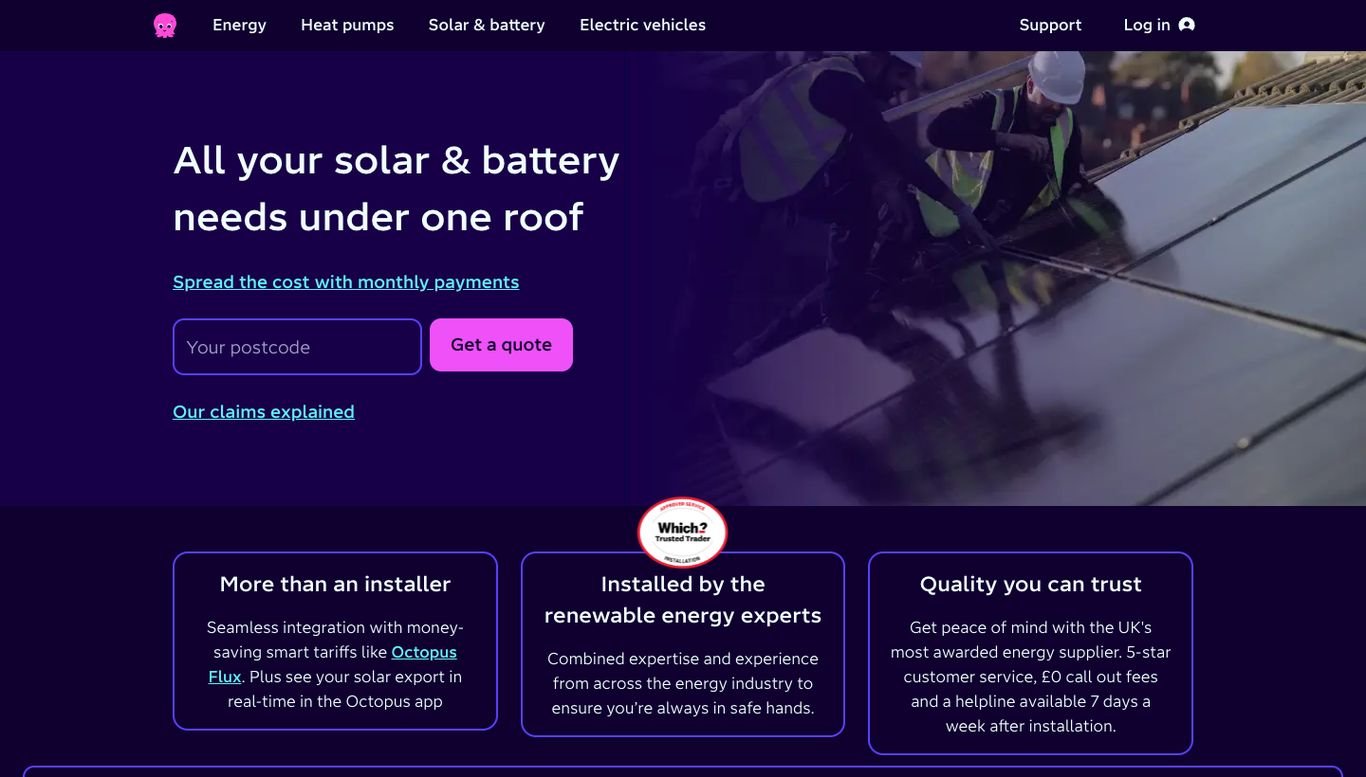
Octopus uses its signature purple with “All your solar & battery needs under one roof,” a postcode box, and a “Get a quote” button. Links for spreading the cost with monthly payments and “Our claims explained” sit right under the form, and three value cards cover integration with its tariffs, installation expertise, and support.
What to borrow: An “Our claims explained” link that builds trust.
10. EDF

EDF’s solar page leads with “Power up and save all year round with solar,” a seasonal offer badge, and a single postcode field with a “Get started” button. A Which? Trusted Trader badge sits on the roof image, adding instant credibility from a recognised name.
What to borrow: Third-party trust badges placed directly on the hero image.
11. Sunsave

Sunsave’s hero promises “Big energy bill savings from day one” with a yellow “Calculate savings” button. Lower down, it explains its pay-nothing-upfront packages and a government-backed loan scheme, while a strip of review and media logos builds trust.
What to borrow: A savings calculator as the main call to action.
12. Enpal
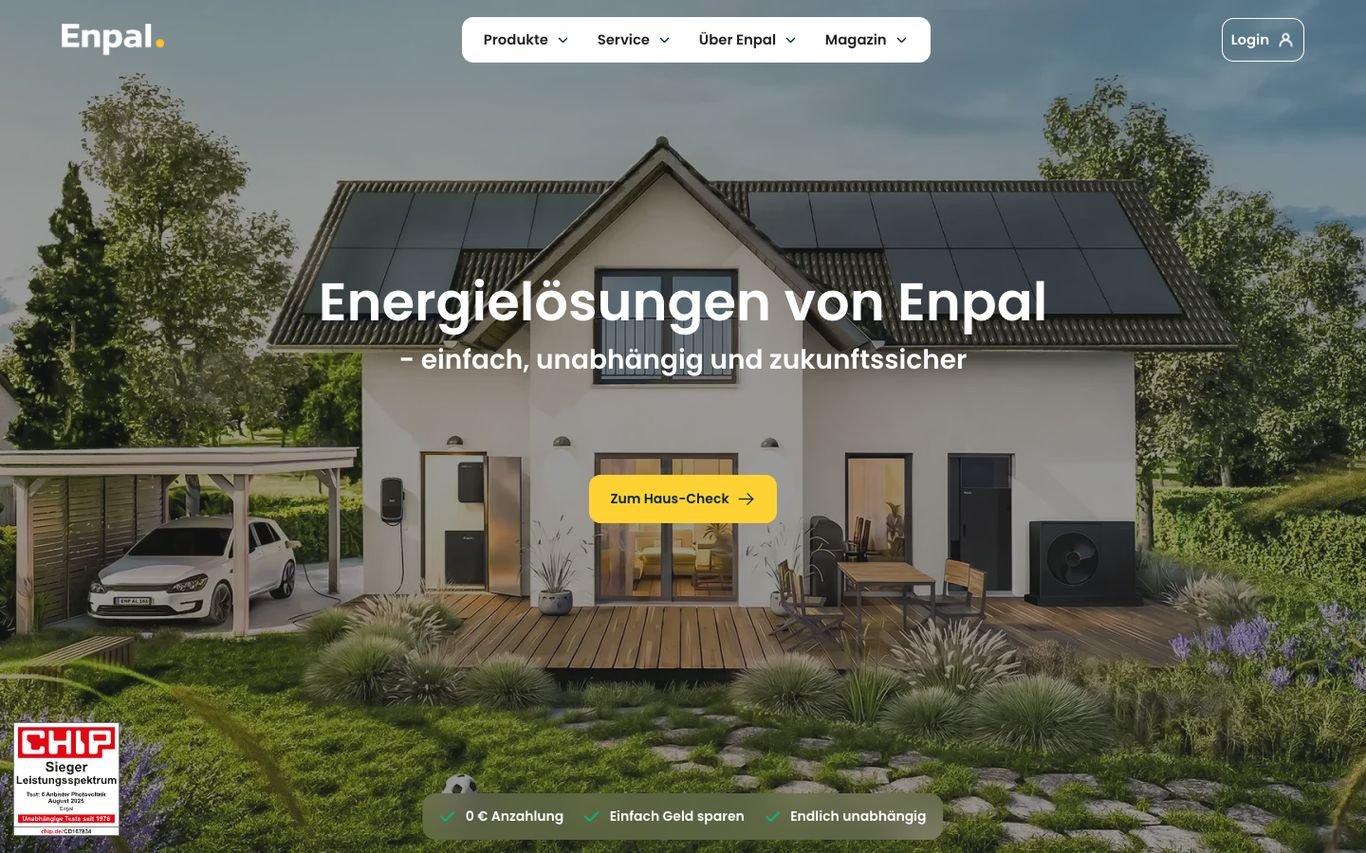
Enpal shows a bright 3D render of a home with panels, a heat pump, and an EV, under “Energy solutions from Enpal: simple, independent, and future-proof.” A yellow “Zum Haus-Check” button invites visitors to check whether their home is suitable, and an award badge sits in the corner.
What to borrow: A “check your home” quiz as the first step.
13. Solargain

Solargain uses its hero slider to explain a timely incentive, a federal battery rebate, with “Register now” and “Read more” calls to action. A stats bar below the hero shows its experience and installation numbers, and a chat widget offers help straight away.
What to borrow: Explain government rebates where buyers will see them.
14. Yellowsolar

Yellowsolar goes big: “Your Power. Your Home. Your Battery.” over an aerial photo of a house at sunset. A yellow “Get your free quote” button, its service areas around Sydney, and badges for accreditation, ratings, and battery specialism make the local credentials clear.
What to borrow: Accreditation and rating badges right under the call to action.
15. EcoFlow
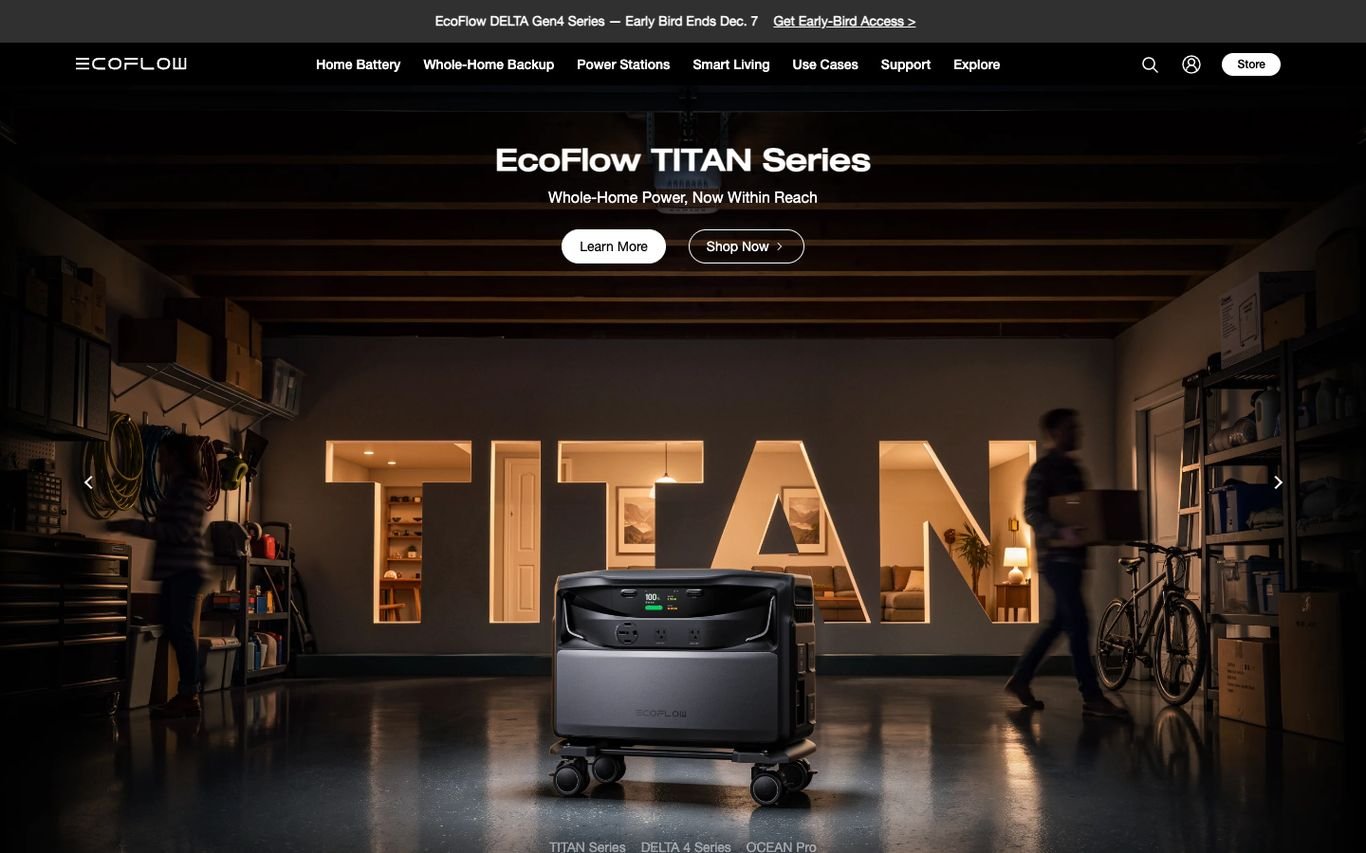
EcoFlow sells equipment rather than installation, and its homepage reflects that. Its TITAN series appears in a dramatic garage scene with giant lettering, “Learn More” and “Shop Now” buttons, and a promotional bar across the top. It is a strong model for solar product brands.
What to borrow: Treat the flagship product like a hero image.
16. Canadian Solar
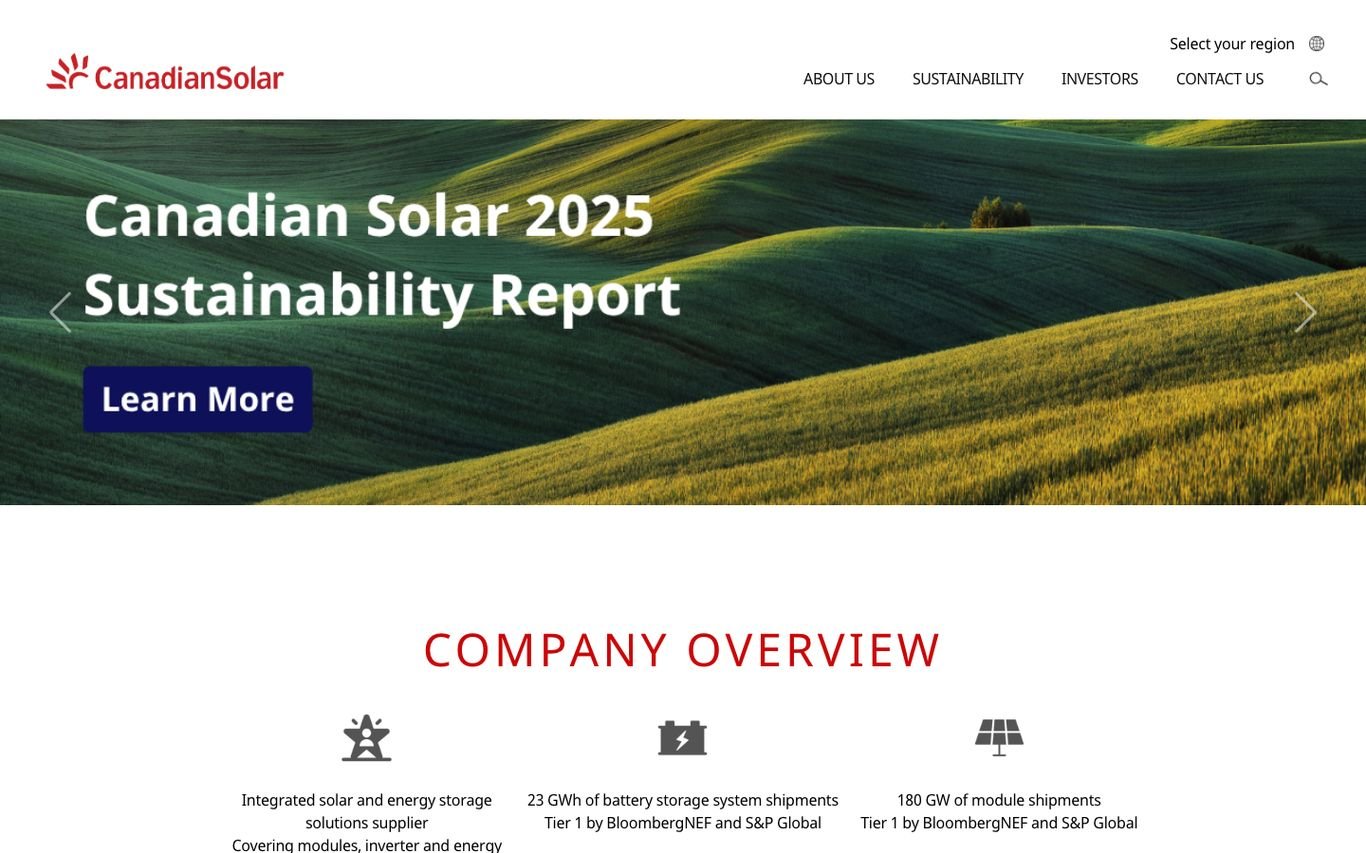
Canadian Solar’s corporate homepage leads with its sustainability report over rolling green hills, followed by a “Company Overview” row of icons and figures about its storage and module business. It shows how a manufacturer can speak to investors and partners rather than homeowners.
What to borrow: Headline company figures presented as simple icon cards.
17. Sigenergy

Sigenergy uses a dark image of the Earth from space and “Enjoy Green Energy,” setting a tech-forward tone. The navigation separates For Home, For Business, and For Utility, so each audience can head straight to the products that fit them.
What to borrow: Separate navigation paths for home, business, and utility customers.
Quick Comparison
| Website | Market | Standout Feature |
|---|---|---|
| 1KOMMA5° | Germany | Region selector and a clear energy promise |
| Sunrun | US | Three-word headline and press proof |
| SunPower | US | Company news in the hero |
| Freedom Forever | US | Aerial roof imagery with education |
| Palmetto | US | Interactive bill slider |
| Project Solar | US | Instant quote without a salesperson |
| Solar Energy World | US | ZIP code estimate in a curved hero |
| Trinity Solar | US | Solar plus roofing, with referrals |
| Octopus Energy | UK | Postcode quote, monthly payments, and transparency |
| EDF | UK | Postcode-first offer page |
| Sunsave | UK | Savings calculator and pay-nothing-upfront model |
| Enpal | Germany | Bright 3D house render and a home check |
| Solargain | Australia | Rebate-led messaging |
| Yellowsolar | Australia | Huge headline and local credentials |
| EcoFlow | US | Product as the hero |
| Canadian Solar | Global | Corporate and investor-friendly |
| Sigenergy | Global | Dark, tech-forward brand with audience paths |
Design Tips for Your Solar Website
1. Start the Quote With One Field
Octopus, EDF, and Solar Energy World ask only for a postcode or ZIP code at first. Project Solar asks for an address and an average bill. Collect the rest later. A short first step gets far more people started.
2. Make Savings Interactive
Palmetto’s bill slider and Sunsave’s savings calculator make the value personal. A visitor who sees their own estimated saving is much more likely to request a quote.
3. Address the Fear of Sales Pressure
Many homeowners have had pushy solar sales calls. Project Solar’s “no sales calls” promise and Octopus’s “claims explained” link speak directly to that worry.
4. Put Trust Signals Next to the Call to Action
Accreditations, review ratings, warranties, and recognisable badges such as Which? work best right beside the quote button, as Yellowsolar and EDF show.
5. Explain Financing and Incentives
Rebates, government schemes, and monthly payment options often decide whether a homeowner goes ahead. Solargain and Sunsave make them part of the homepage story.
6. Serve Existing Customers Too
Customer portals, support links, and referral programmes, as seen at Freedom Forever and Trinity Solar, cut support calls and generate word-of-mouth leads.
7. Send Quote Requests Straight to Your CRM
Every quote request should land in your CRM with the postcode, bill size, and source attached, so your team can follow up fast. Our guide to sending website enquiries straight into your CRM explains the approach, and it works the same way for solar.
Frequently Asked Questions
What should a solar company homepage include?
A short quote form, a savings message or calculator, trust signals such as reviews and accreditations, financing information, and photos of real installations.
Should solar websites show prices?
Showing typical prices or an instant estimate builds trust and filters out poor-fit leads. Project Solar and Palmetto make pricing part of the first interaction.
Can a solar company sell panels online?
Yes. Equipment brands such as EcoFlow sell directly, and installers can sell kits or accessories through WooCommerce, as Dev Mizan did for CSESolar USA.
Is WordPress good for solar company websites?
Yes. WordPress handles service pages, quote forms, calculators, case studies, and online stores with WooCommerce, and it connects to most CRMs.
Conclusion
The best solar company websites make the first step easy, show the savings, and earn trust before asking for a call. Use these 17 examples as inspiration, borrow the patterns that fit your market, and make sure every quote request reaches your team quickly.
Dev Mizan designs and builds websites for solar installers and energy brands on WordPress and WooCommerce, with quote forms connected to your CRM. Get in touch to plan your new solar website.